Sign in for exclusive products and special discounts.
How to Use the Socratic Method in Your Homeschool
And Why It May Change the Way Your Children Learn
Many homeschool parents worry that good discussions are something that only happens in classrooms filled with students raising their hands while a teacher at the front of the room calls on someone to speak. In reality, the homeschool environment is ideal for engaging students in discussions using one of the most powerful teaching approaches ever developed: the Socratic method.
At its heart, the Socratic method is simple. Instead of telling students what to think, the instructor asks thoughtful questions and then listens. Learning happens not through lecture but through dialogue.

What Is the Socratic Method?
The Socratic method is based on guided conversation. Students read, observe, or study something meaningful and then explore it through open-ended questions:
-
What might be another way to see this idea?
-
Why do you think the author chose those words?
-
Do you agree? Why or why not?
The goal isn’t to arrive at a single “right” answer. The goal is to think carefully, listen respectfully, and articulate ideas clearly.

Why It Works So Well for Homeschoolers
Homeschooling already offers what many schools struggle to provide: time, flexibility, and meaningful conversation. The Socratic method builds directly on those strengths.
Socratic discussions:
-
Encourage deep thinking instead of rote memorization
-
Give quieter children space to find their voice
-
Channel gifted students’ intensity into thoughtful dialogue
-
Help all students remember what they’ve learned and retain it
Because students actively engage with ideas, the learning lasts.
But Isn’t the Socratic Method “Too Formal” for Home?
Not at all. A Socratic seminar doesn’t require a classroom, a bell schedule, or even a large group. It can happen:
-
Around the kitchen table
-
With siblings of different ages
-
In a homeschool co-op
-
After reading a novel, a history passage, a speech, or even a science article
What matters is not the setting but the quality of the questions and the expectation that every voice matters.
Dialogue, Not Debate
One of the most important aspects of the Socratic seminar is that it is not a debate. Students are not trying to win. They are trying to understand.
This distinction is especially important for homeschool families. When dialogue replaces debate:
-
Children learn to listen, not just respond
-
Disagreement becomes thoughtful rather than emotional
-
Respect for others’ ideas grows naturally
Getting Started Is Easier than You Think
Many parents love the idea of Socratic discussions but feel unsure about how to begin. How many questions should you ask? What if the conversation stalls? How do you guide without dominating? That’s where a clear, practical guide can make all the difference.
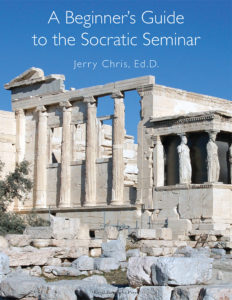
A Beginner’s Guide to the Socratic Seminar by Jerry Chris, Ed.D., was written specifically for teachers and homeschool instructors who want to use this method confidently and effectively. It walks readers through:
-
The rules and structure of a Socratic seminar
-
How to ask good questions
-
How to adapt seminars for students of different ages and group sizes
-
Follow-up writing and evaluation ideas
With decades of classroom experience behind it, the book demystifies the process and makes it accessible for any homeschool parent or instructor.
A Final Note from the Publisher
The Socratic method represents the kind of academic approach that Royal Fireworks values most: not more worksheets or longer lectures but serious thinking, meaningful conversation, and genuine engagement with ideas.
When children learn this way, they don’t just learn more; they enjoy learning more.