Sign in for exclusive products and special discounts.
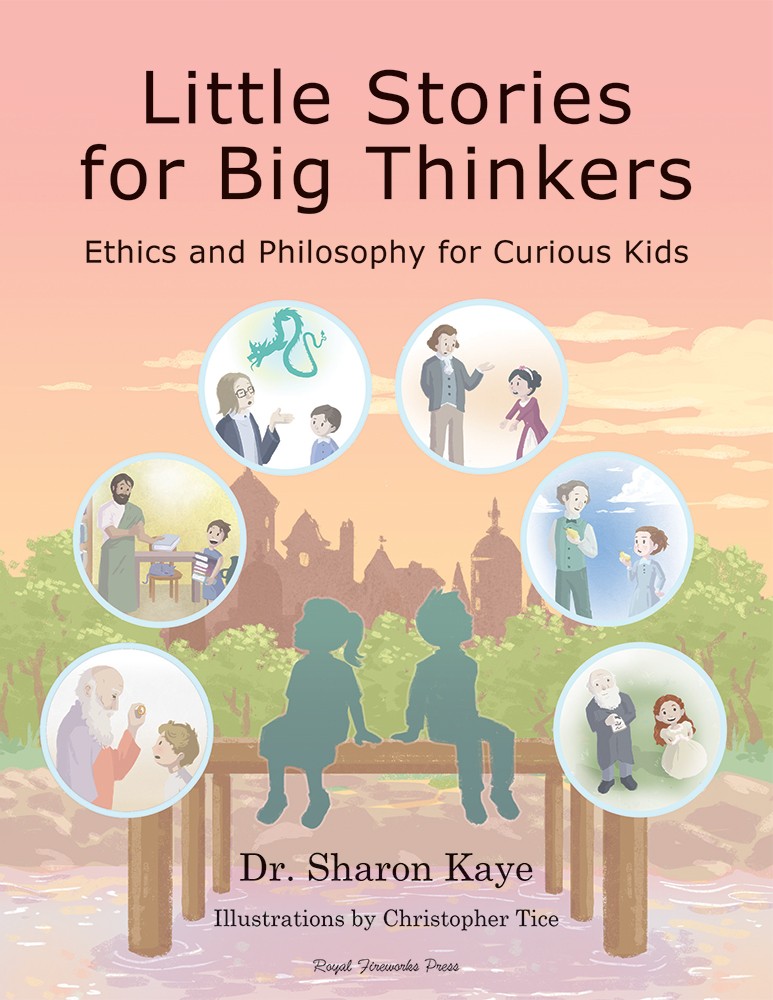
Little Stories for Big Thinkers
Ethics and Philosophy for Curious Kids
$25.00
Order Code: 2672
A Dyslexia-Friendly Book!
Mom’s Choice Gold Award-Winner!
This charmingly illustrated book contains six stories that introduce children to some of the world’s most famous philosophers, each of whom had specific ideas about how best to live a good life. The stories are open-ended, leaving the characters pondering questions about how to handle a difficult situation. This format provides adults of an array of faiths and backgrounds with a framework to discuss their core values with children, enabling them point them toward actions that will help them live a good and ethical life.
Description
A Dyslexia-Friendly Book!
Mom’s Choice Gold Award-Winner!
For more than two thousand years, since the beginnings of recorded philosophical speculation, people have contemplated how to live a good life. We all want to be happy, but we want to do the right things, too, both as individuals and as members of a larger society. Optimally, doing the right things will make us happy, and if we all strive to achieve that end, then we’ll all be happier together.
Unfortunately, it’s not always easy to know what the right things are. Different people have different ideas and beliefs that lead them to different answers. Sometimes that causes conflict. But in general, we’re all striving to do the best we can. And most of us believe that it is profoundly important that we guide our children toward that end as well. Hence the study of ethics.
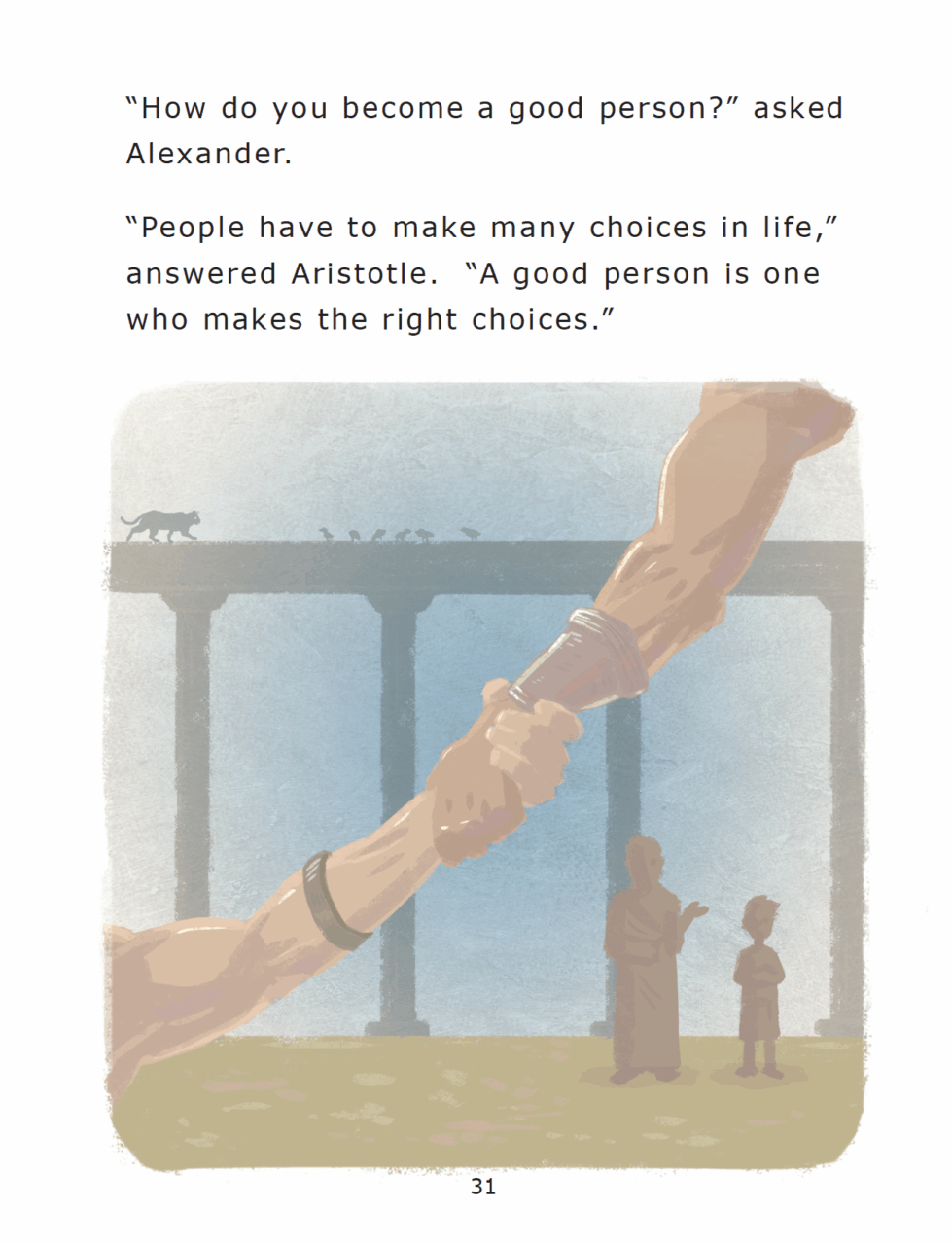
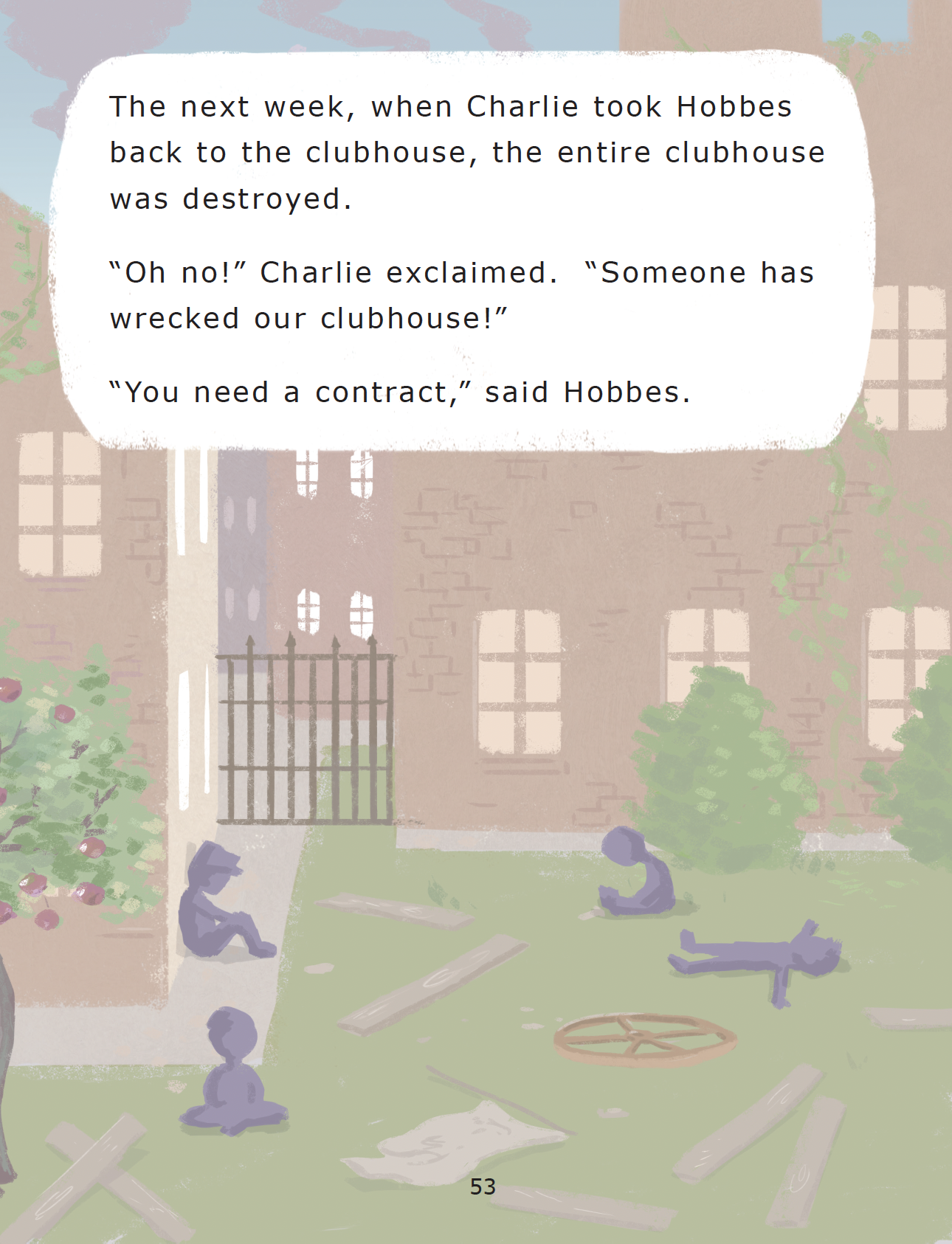
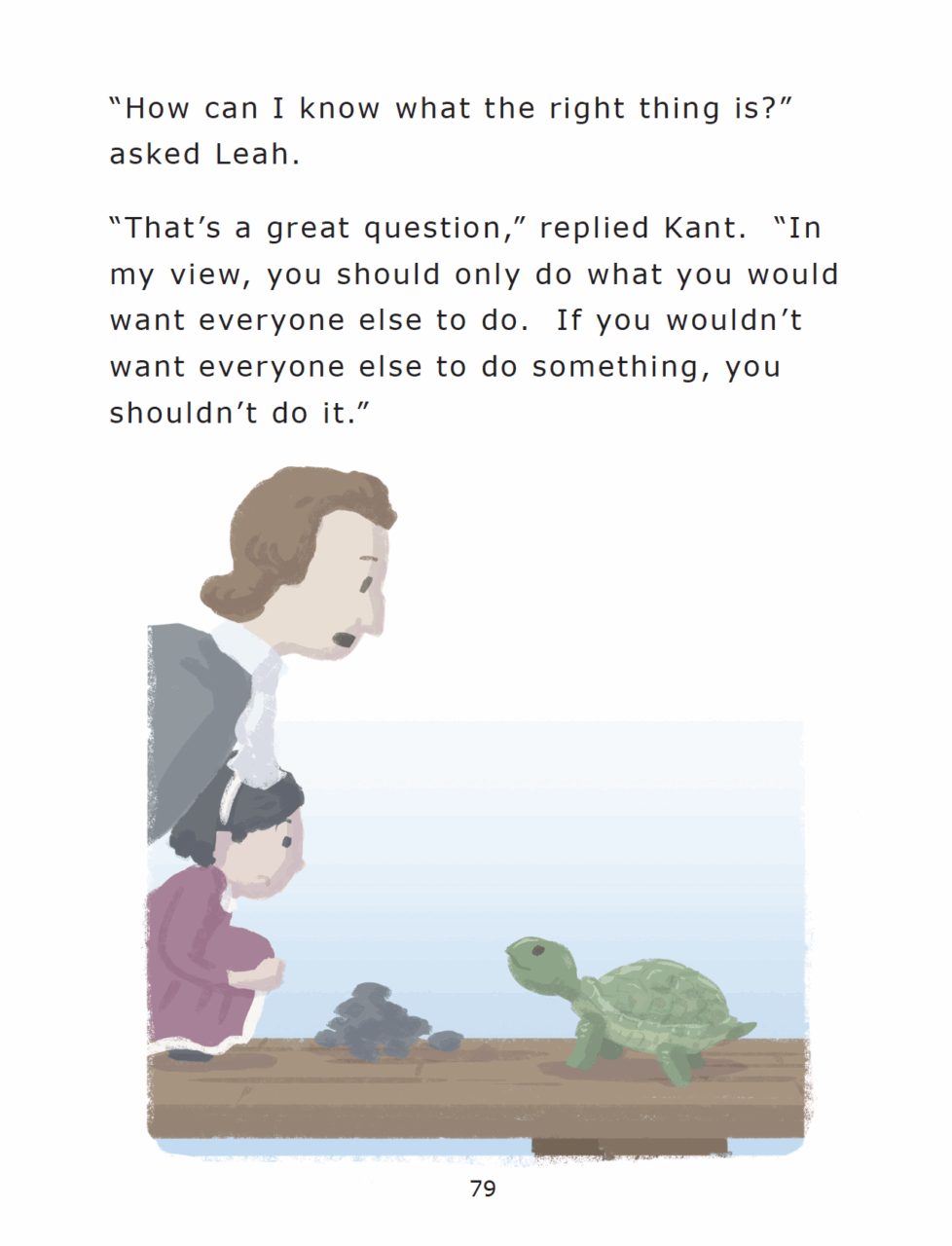
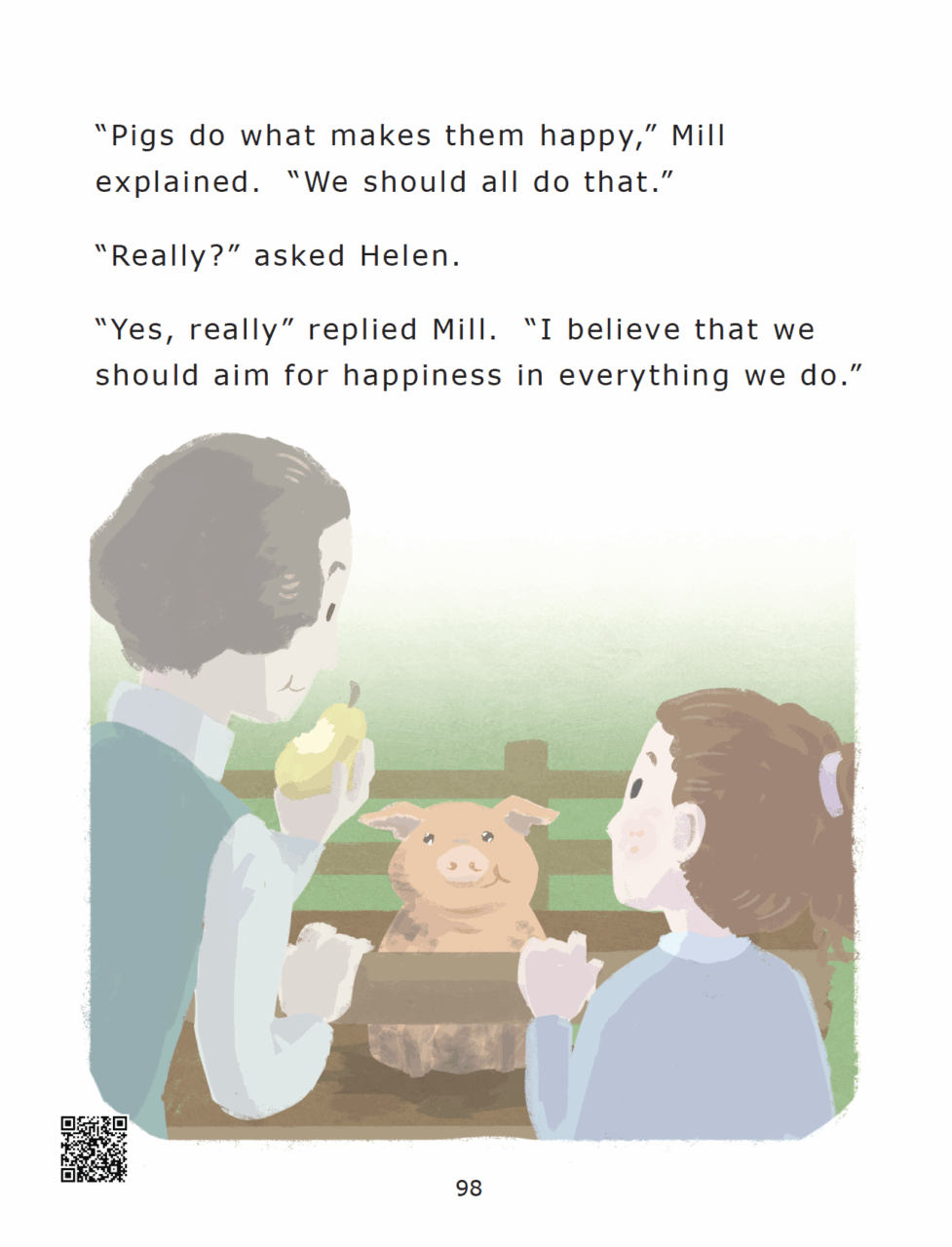
This charmingly illustrated book contains six stories that introduce children to some of the world’s most famous philosophers—Plato, Aristotle, Thomas Hobbes, Immanuel Kant, John Stuart Mill, and Charles Darwin—each of whom had specific ideas about how best to live a good life. Through these stories, even very young children can become familiar with various classic theories on living ethically.
A defining feature of this book is that it is open-ended. Each story introduces a prominent philosopher from history, as well as a young student of that philosopher who is confronted with a conflict that raises questions about how best to move forward. The philosopher offers guidance based on his theory but then sends the child off to think about what to do. Alone, the child contemplates the implications of that theory, pondering questions about its application and consequences.
Because there are no answers given, adults can help guide children if they wish (although the stories always point toward general principles of caring for self and others), enabling them to include specific religious or cultural beliefs in the resulting discussions. In this way, the book provides a framework for people of a wide array of faiths and backgrounds to talk to children about how they would like to see them conduct themselves as they grow and mature.
It is important that we give our children opportunities to think about how they want to live in the world today. It can be difficult to navigate how best to handle certain situations, especially when it feels as if adults are shouting seemingly opposite answers at each other everywhere we turn. In our increasingly complex world, instilling our children with our core values and then pointing them toward actions that exemplify those values is one of the most important things we can do to help them live a good life—and maybe to help make the world a better place in the process.
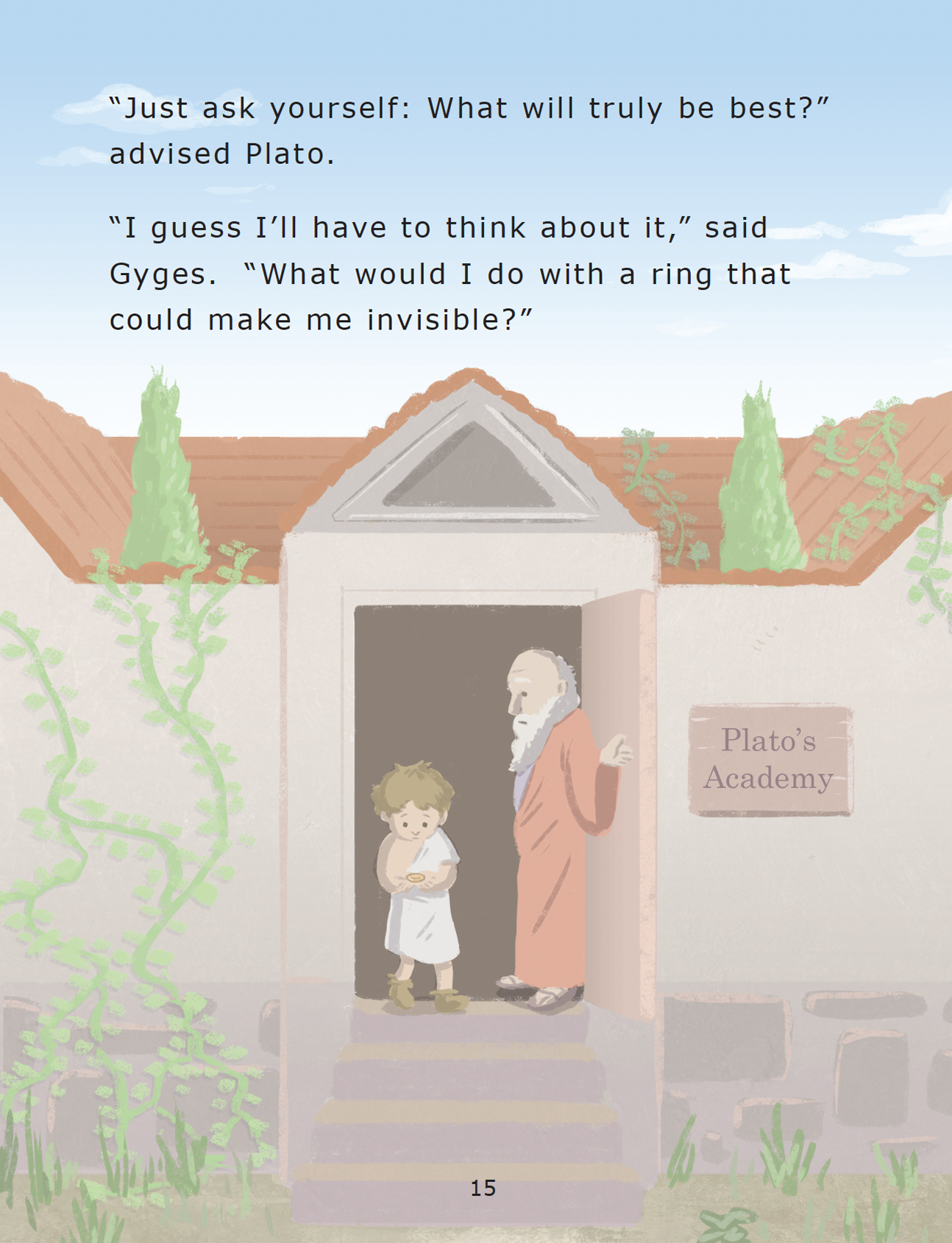
Note: This book is specially designed to be accessible to children with dyslexia and other reading challenges. Features include a dyslexia-friendly font, fully illustrated pages, and QR codes that link to audio narration of the text.
Details
Testimonials
“Just wanted to update you on the book. The kids are LOVING it!! They kept asking, ‘Can we read the next chapter?’ It was amazing to bring philosophy to change things up with the kiddos. Thanks again. 🙂 – Melanie K., instructor at an upper elementary after-school program (written directly to the author)
Reviews
More info
Sample Pages
-
Little Stories for Big Thinkers · View Little Stories for Big Thinkers · Download Little Stories for Big Thinkers