
Sign in for exclusive products and special discounts.
News

30 September 2016
The Interdisciplinary Concept of the MCT Vocabulary Program
“My central concept for ‘The Word Within the Word’ is that it is a profoundly interdisciplinary vocabulary curriculum, interweaving the vocabulary of science, mathematics, history, literature, art, and more into a great vocabulary fabric that will make students better in every subject and prepare them for the future like no other curriculum ever has.” – Michael Clay Thompson
Read more

1 September 2016
Transforming Gifted Education from a Dream to a Goal
“From time to time, it is healthy for us, as educators devoted to optimizing differentiated education for gifted children, to reexamine our most fundamental assumptions. The assumption I would like to discuss can be expressed in a question: Is gifted education a dream or a goal?” – Michael Clay Thompson
Read more
22 August 2016
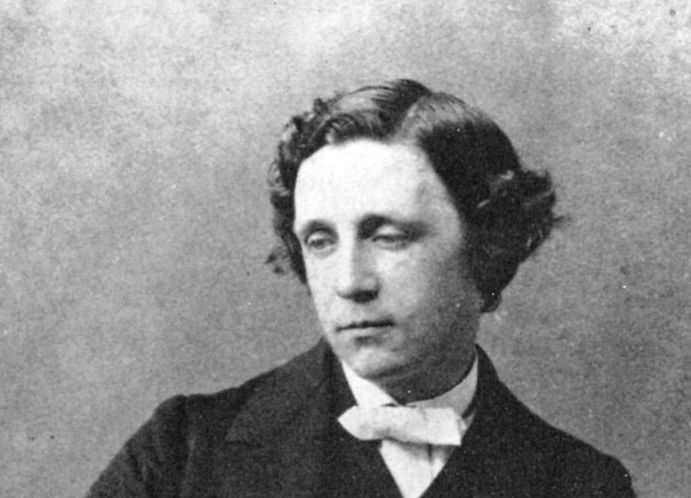
Lewis Carroll, the Original Mathematical Novelist
“Whenever I give a presentation on my Mathematical Nights books, there’s one name that I always mention: Charles Lutwidge Dodgson. You may know him better by his pen name: Lewis Carroll. As a writer, he often blended his mathematical skills with his whimsical style—sometimes in obvious ways and other times in ways that are harder to find.” – Robert Black
Read more

15 June 2016
Giftedness Is Not Something You Outgrow
“For more than thirty years, I’ve written and spoken about the difficulties gifted kids and their families face in a world that doesn’t recognize their differences or, if it does, offers little to help them accept and cope with, let alone take joy in, those differences. It can still be difficult for such a child to believe, ‘It’s okay to be me.'” – Stephanie Tolan
Read more

11 May 2016
The Importance of Philosophy
“I want philosophy to be a lifelong friend for my children—and for all of their friends, and for all of their friends’ friends, and for the whole next generation. As they venture into civilization, philosophy will be their defense against me and all of the teachers, role models, bosses, and societal influences who, well-meaning or not, give too many suggestions and with too heavy a hand.” – Dr. Sharon Kaye
Read more

11 April 2016
We Must Advocate for Real Reading
“We must advocate for real reading. There is nothing else in education—nothing—that is as educational as reading. By reading serious literature, both fiction and nonfiction, students experience the full range of intellectual experience. They grow in their reading power and can read better and deeper, with more comprehension and enthusiasm for important stories and ideas.” – Michael Clay Thompson
Read more
30 March 2016
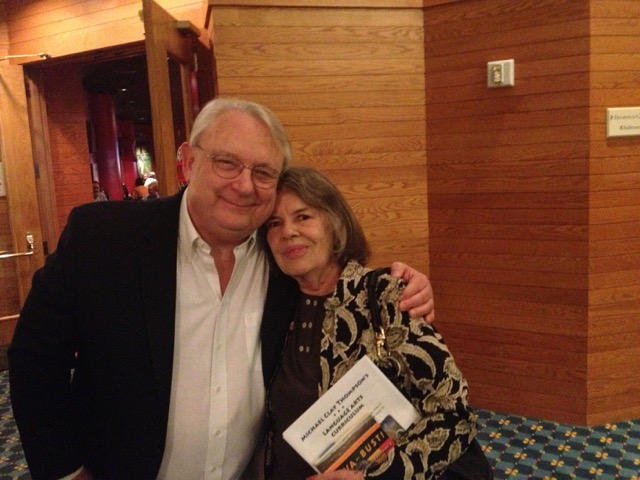
The Life-Changing Moments that Resulted in the MCT Curriculum
“In my life, no teacher had ever told me that I could write—not in elementary or middle or high school, not in college or university. It took Julie Long—with her immovable, fierce brain—to push me in a direction that would make me happy. She believed in me years before I did.” – Michael Clay Thompson
Read more

13 January 2016
Why Math Fiction?
“For many people, learning math mostly involved working a seemingly endless set of exercise problems. Such drills have their place, but if that’s all students do, they’re missing a big part of what math is about. In fact, they’re missing the most important part: the opportunity to see math as a creative, collaborative experience, full of possibilities for exploration and discovery.” – Robert Black
Read more

2 November 2015
Do We Still Need Black History Month?
“Black History Month is a celebration of important people and events in the history of African-Americans and is commemorated in the United States in February. But both black and white critics raise the question: Is Black History Month still needed?” – Richard Beck
Read more

16 October 2015
The Relevance of Walden Today
“A teacher of high school honors English, I had always enjoyed the lively discussions related to my students’ reading of Henry David Thoreau’s ‘Walden.’ Everything about Thoreau’s life intrigued them. But there was one big downside: Thoreau’s layered, dense, nineteenth-century language, with all its subtleties, was hard for them to penetrate. They ‘got’ him, but his writing was quite another matter.” – Anne Faigen
Read more

17 August 2015
The Problem of Evaluation
“As a classroom teacher, I always tended to have high standards, and to give enormous assignments and challenges, but to be generous about grading. I think, deep down, the generosity was based partly on appreciation and admiration of the work the students were doing, but also on deep concerns about the reliability and validity of evaluation. And yet—here’s the thing—we have to do it.” – Michael Clay Thompson
Read more

14 June 2015
Why Learning to Read Is Difficult for Some Children
“Between 2% and 20% of schoolchildren have some type of reading problem. Educators are starting to recognize the importance of the visual system and eye-tracking skills for reading, but these skills must be trained before a child with reading problems can be successful..” – Dr. Kenneth A. Lane
Read more

1 May 2015
What It’s Like to Be a Parent of a Gifted Child
Being a parent of a gifted child can be stressful. You have to cope with constant questioning all day long, unusual behavior that is difficult to understand, and negative comments from other people, including relatives. Here is some advice from the mother of a profoundly gifted boy.
Read more

14 April 2015
Reading Is Not a Spectator Sport
“In my language arts classrooms, I did not teach reading; I taught literature. I assumed that students knew how to read the literature we tackled, and for some students, that assumption was true. But for others, it was not. Teaching sound literacy skills not only will create successful language arts students, but it will create successful science, social studies, and math students, and it will create successful employees in all industries.” – Steve Loe
Read more