
Sign in for exclusive products and special discounts.
Category: Michael Clay Thompson

6 January 2017
A Letter to Michael Clay Thompson from Grateful Parents
“I have no doubt that every child would benefit from what you have to offer. For our particular child, though, this connection to the world of ideas…I do not mean to overstate it, but this has been a lifeline for her.” – parents of a child taking one of Michael’s courses at Royal Fireworks Online Learning
Read more

15 October 2016
Doing Four-Level Grammar Analysis Is Like Practicing the Piano
“Why do students have to keep doing four-level analyses in every level of the MCT curriculum once they know how to do it? This is a good question. But four-level analysis is different because it is an expansive inquiry into language; it is investigating something that is not concrete or simple but that is essentially bottomless.” – Michael Clay Thompson
Read more

30 September 2016
The Interdisciplinary Concept of the MCT Vocabulary Program
“My central concept for ‘The Word Within the Word’ is that it is a profoundly interdisciplinary vocabulary curriculum, interweaving the vocabulary of science, mathematics, history, literature, art, and more into a great vocabulary fabric that will make students better in every subject and prepare them for the future like no other curriculum ever has.” – Michael Clay Thompson
Read more

1 September 2016
Transforming Gifted Education from a Dream to a Goal
“From time to time, it is healthy for us, as educators devoted to optimizing differentiated education for gifted children, to reexamine our most fundamental assumptions. The assumption I would like to discuss can be expressed in a question: Is gifted education a dream or a goal?” – Michael Clay Thompson
Read more

11 April 2016
We Must Advocate for Real Reading
“We must advocate for real reading. There is nothing else in education—nothing—that is as educational as reading. By reading serious literature, both fiction and nonfiction, students experience the full range of intellectual experience. They grow in their reading power and can read better and deeper, with more comprehension and enthusiasm for important stories and ideas.” – Michael Clay Thompson
Read more
30 March 2016
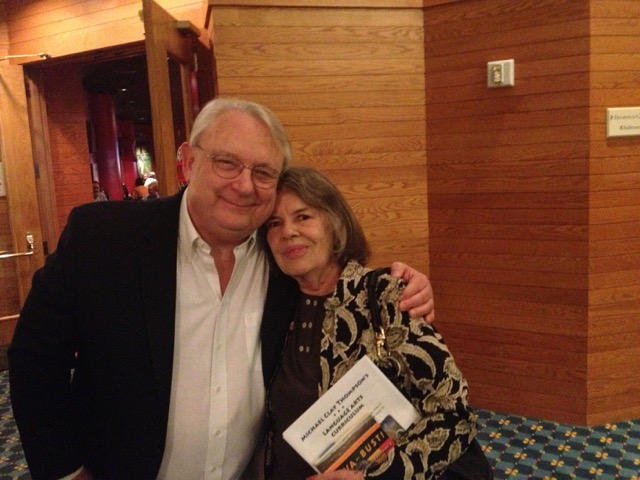
The Life-Changing Moments that Resulted in the MCT Curriculum
“In my life, no teacher had ever told me that I could write—not in elementary or middle or high school, not in college or university. It took Julie Long—with her immovable, fierce brain—to push me in a direction that would make me happy. She believed in me years before I did.” – Michael Clay Thompson
Read more

17 August 2015
The Problem of Evaluation
“As a classroom teacher, I always tended to have high standards, and to give enormous assignments and challenges, but to be generous about grading. I think, deep down, the generosity was based partly on appreciation and admiration of the work the students were doing, but also on deep concerns about the reliability and validity of evaluation. And yet—here’s the thing—we have to do it.” – Michael Clay Thompson
Read more

2 December 2013
Common Core and American Nonfiction: Some Thoughts
“The Common Core standards have been adopted in the majority of states, to our relief or disappointment, depending upon our understanding of the standards. My impression is that some of the negative reactions to Common Core have not so much to do with the standards themselves as with how they are interpreted or implemented.” – Michael Clay Thompson
Read more

1 May 2013
Assessing the Cult of Assessment
“I am sometimes asked, ‘What are we supposed to do with this? Just read?’ It is true: my curriculum is different, particularly in its philosophy of assessment. I think we must change the terms from what students can FIND to what they can THINK after careful reading.” – Michael Clay Thompson
Read more

12 March 2013
Poetry or Prose: A False Dichotomy
“We must include the formal study of poetics as one of the core components of language arts. Using the sentences of great novelists as their models, students can begin to experiment with poetic devices, not only in their own poems but in their own prose sentences.” – Michael Clay Thompson
Read more

10 March 2013
Developing Verbal Talent
“For gifted children, the development of verbal talent is among the deepest joys and most critical preparations of life, but the talent will not develop on its own. If we provide access to books, enlightenment about grammar, and enthusiasm for words, then children will move forward into exciting experiences in language that will be catalysts for the development of verbal talent.” – Michael Clay Thompson
Read more
25 February 2013
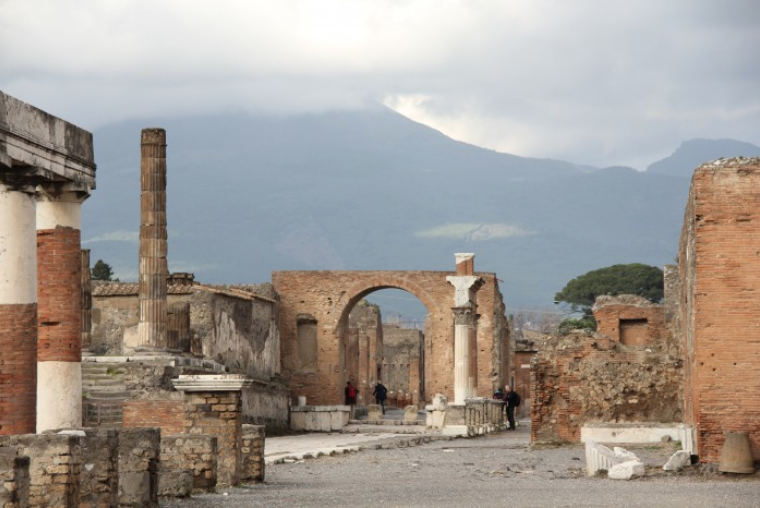
Education: It’s Not on the Test
“The exciting thing is how far we are able to extend learning. None of the extra material included in Michael’s books is on the test. That is not why it is there. It is intended to expand our children’s horizons so that they can make themselves more knowledgeable about things that interest them and so that they can be better educated about the civilizations that produced their world.” – Dr. T.M. Kemnitz
Read more

15 February 2013
Caesar’s English: Vocabulary Books for a Truly Classical Education
“The primary pedagogic purpose of ‘Caesar’s English’ is to teach vocabulary—the academic vocabulary that children will need to succeed in education and in professional life. But these books have a wealth of additional content. They are everything we want textbooks to be.” – Dr. T.M. Kemnitz
Read more
10 February 2013
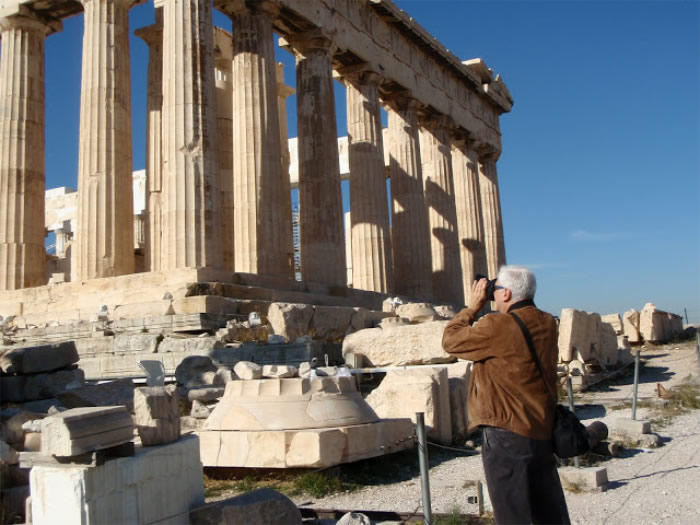
The Genesis of the Classical Education Editions of Caesar’s English
“The ancient Greek and Roman civilizations provided the inspiration for the classical education editions of ‘Caesar’s English.’ There is a difference between good and great; we are determined to bring to you what is truly great, and we will use the best that humankind has created to fire the imaginations of children.” – Dr. T.M. Kemnitz
Read more